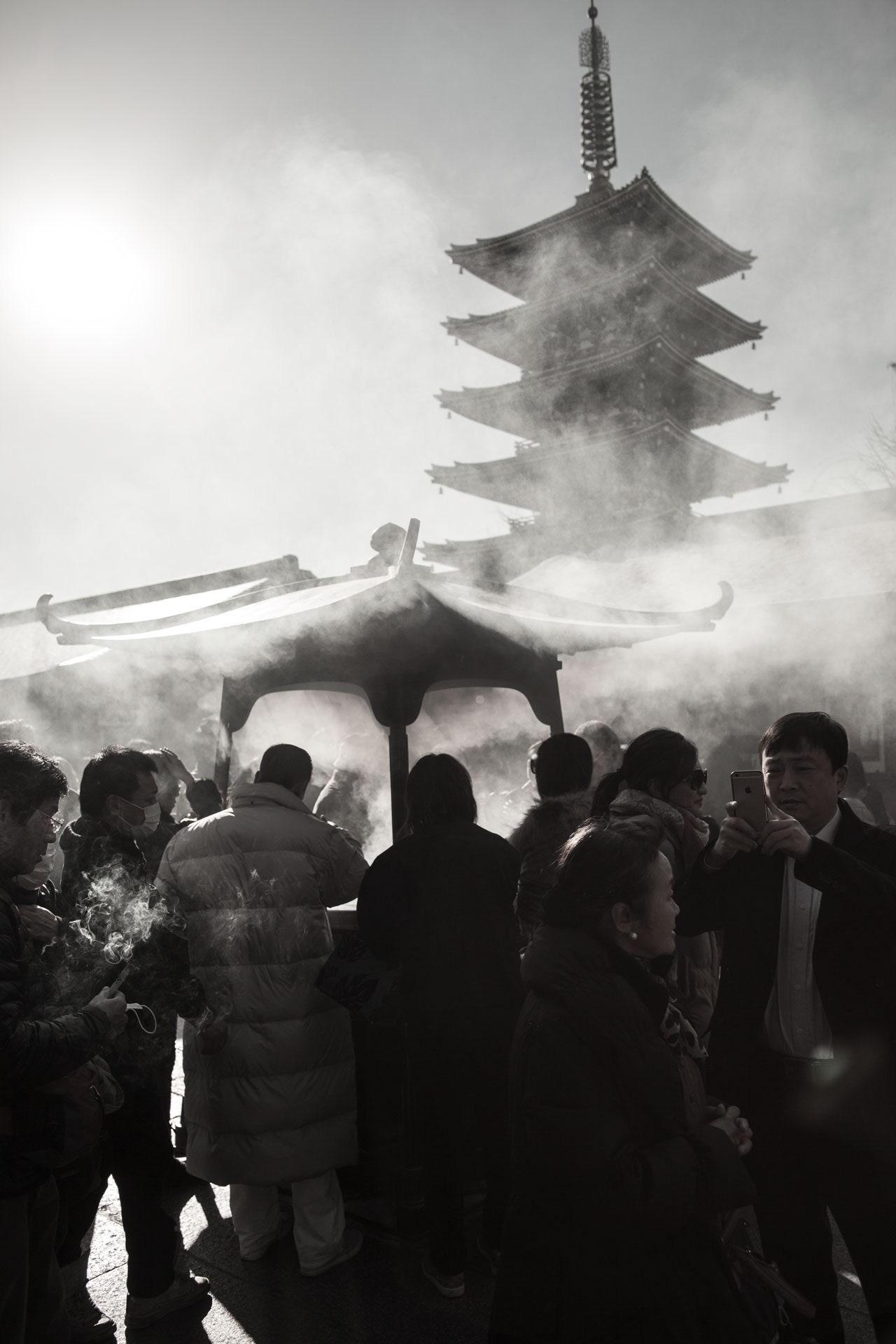
Located in the heart of Tokyo, Senso-ji temple is a popular destination for worshippers and tourists alike. The temple is known for its stunning architecture and rich history, dating back to the 7th century.
With its diverse range of establishments, from yakitori restaurants to record shops, Tokyo truly has something for everyone. It's a place where serendipitous discoveries await, and even the most knowledgeable explorers can find themselves surprised by what they uncover.
While enjoying my stay at one of the 3-star hotels in Tokyo, I decided to explore the vibrant streets of this mighty city.
While exploring, I stumbled upon a hidden gem called the Button Bar. This unique and eclectic establishment captures the essence of Tokyo's charm and is a must-visit for anyone looking for an unforgettable experience.
As I gazed out from my balcony, I couldn't help but marvel at the layers of this bustling city. Tokyo's streets, with their winding paths and unconventional addresses, offer a sense of intrigue and mystery. Within this city, you can stumble upon hidden treasures like the Button Bar, tucked away in a pencil-like building, just a stone's throw away from home.
If you're planning a visit and looking for accomodation options, Tokyo hotels on tophotels.com offer a wide range of alternatives to suit various budgets.
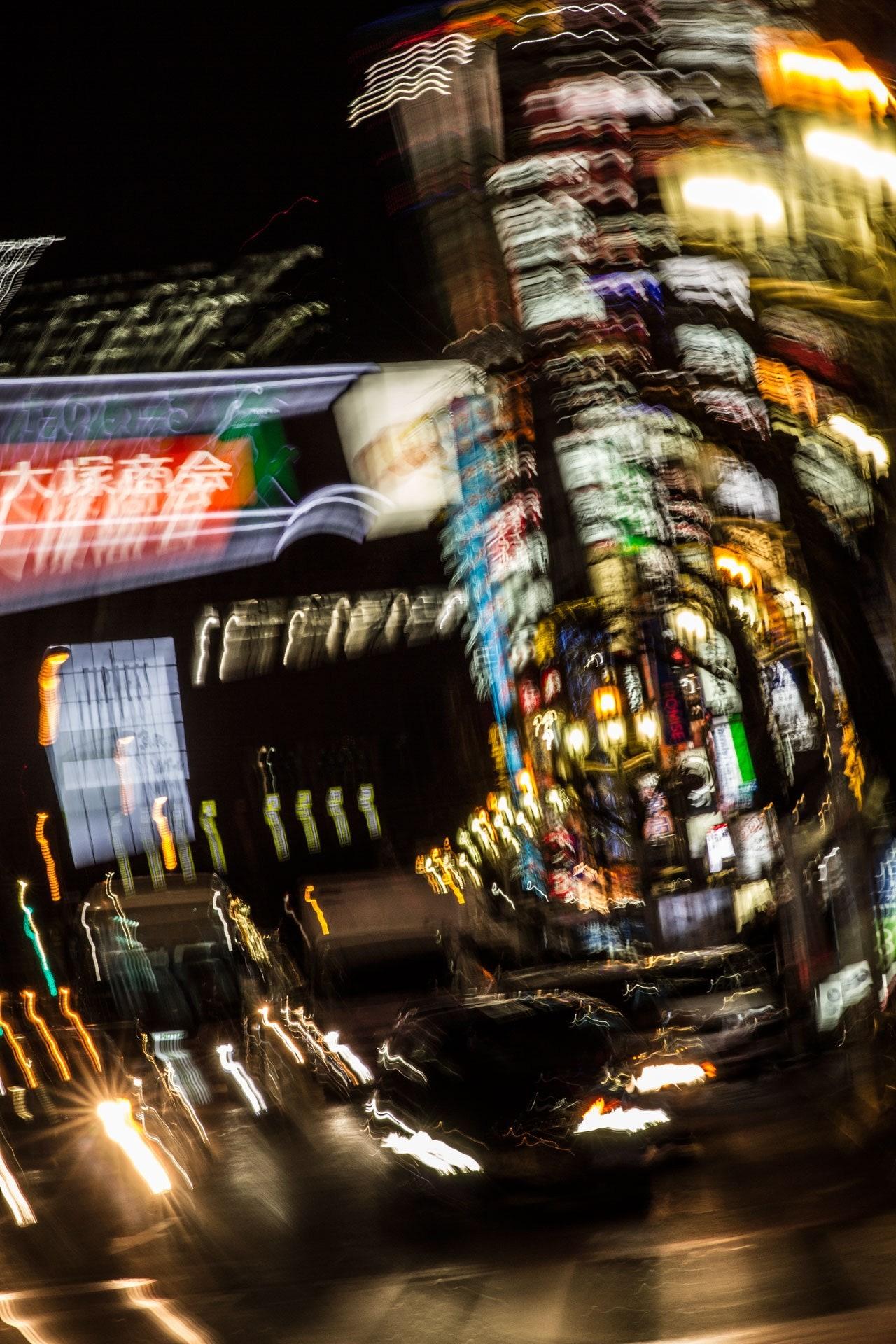
Ginza, TokyoBill Phelps
Some call Tokyo an ugly city, although I beg to differ. Granted, with few grand vistas and little unifying architectural style, it lacks both the palatial perfection of Paris or the intimidating canyons of New York City. But Tokyo has its own compelling narrative: a cyclical story of destruction and rebirth. In its bones of concrete, wood and steel, it has the DNA of survival. Its people do, too.
Over the last 100 years Tokyo has not once but twice experienced almost total destruction: first at the hands of nature (the Great Kanto Earthquake of 1923), and then by humankind (the firebombing of World War II). In Japan, permanence can never be assumed.
Few of the brick structures of the early 20th century remain, and those that do - such as the Tokyo Station building - are renovated as ambrosially as a Disneyland attraction. Post-war buildings are easier to spot: drab, utilitarian, thrown up at a time when Japan had little time or money to spend on a pretty design. However, by the 1980s - the so-called Bubble Era - the tables had turned: the country was awash with cash and ambition, and its buildings got bigger, louder, or just more expensive.
Today, once again, Tokyo is rebounding from another set of disasters, the earthquake and tsunami of March 2011. The city was largely unscathed - people just 200km away were much less fortunate - but the authorities love nothing more than a good excuse to get the concrete mixers churning. After what the Japanese modestly call a 'difficult few years', the economy is on the mend and people are feeling confident. Japan, as the prime minister likes to tell people, is back.
Contrary to the negative economic headlines, Tokyo remains a city of order and kindness. It is a place where even a minor train delay prompts an apology, and where the chances of getting a lost wallet returned, cash included, are incredibly high.
Personal experiences have repeatedly shown me the genuine kindness of the locals. I recall an instance where a bus driver noticed I had overpaid and went out of his way to return the extra coins. Recently, a taxi driver surprised me by returning a bag I hadn't realized I had lost in the middle of the night.
Enter the matrix
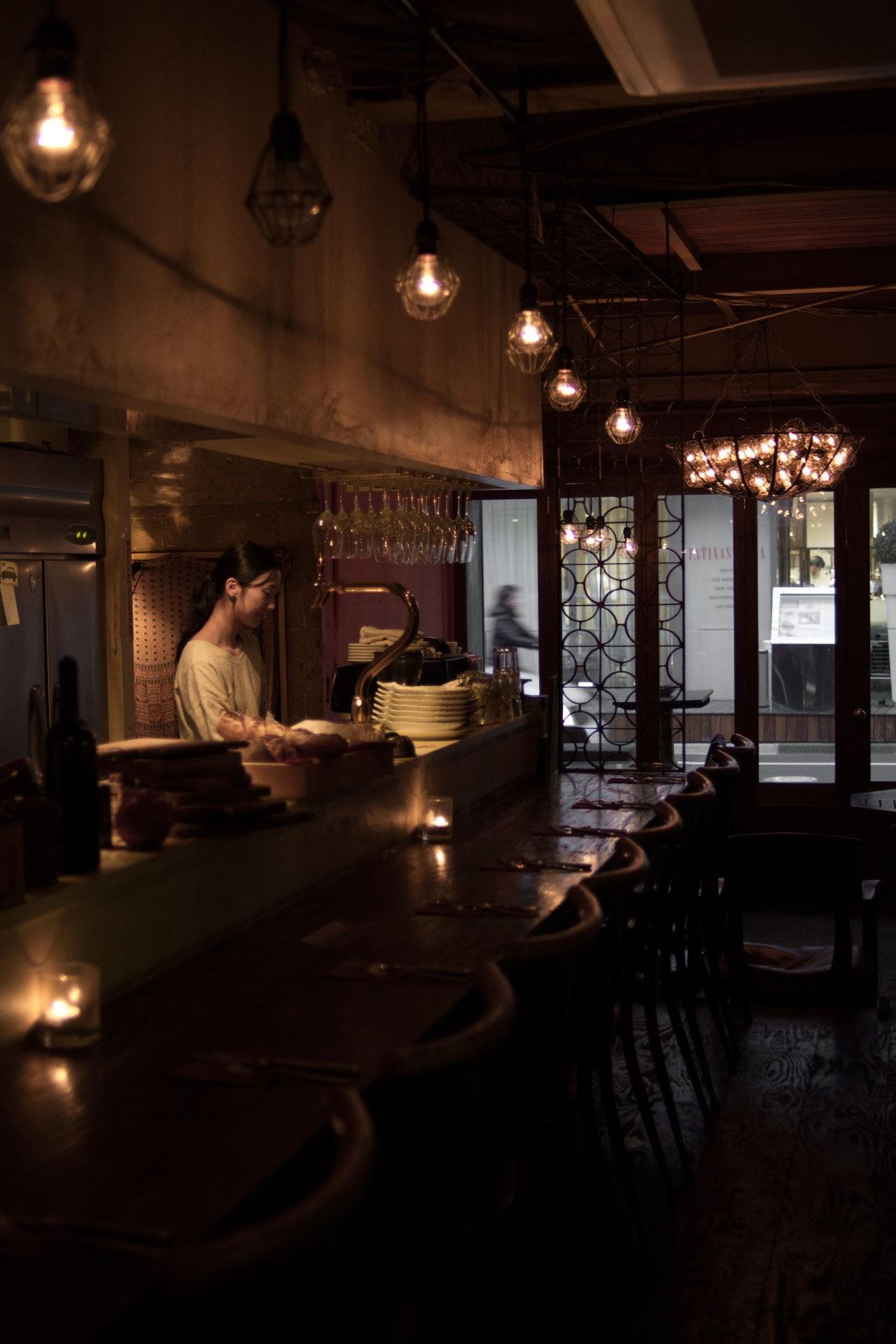
In my 16 years of calling Tokyo home, I have lived all over the city, but the Yoyogiuehara area is dearest to me - one of hundreds of distinct neighbourhoods, each as cosy as a village and cobbled together to form a vast metropolis of 35 million people. My favourite pastime is to wander aimlessly through the narrow backstreets that carve up the urban sprawl into bite-size chunks, making new discoveries at every turn: a trendy slow-drip coffee shop above a tiny fashion boutique behind a workshop for tatami mats next to an old family-run noodle shop.
The neighbouring district of Kamiyamacho is especially exciting for food right now, with a new café, bar or restaurant popping up every week. They include Ahiru Store (+81 3 5454 2146), a wine bar and bakery with just eight seats, and Shibuya Cheese Stand, which makes top-grade mozzarella and ricotta several times a day, served on pizzas or in sandwiches. Pignon (16-3 Kamiyamacho, Shibuya-ku) is a personal favourite. Chef Rimpei Yoshikawa is typical of his generation: unreservedly hospitable and very cool. After dabbling in formal dining in Tokyo and in France, Yoshikawa changed tack and opened a casual bistro serving food inspired by his travels in Morocco: cumin-and-beetroot salad, venison with roasted figs, spicy lamb sausages.
Of all Tokyo's districts, none has more faces than Asakusa. Once known for its expansive 'pleasure quarters', the area is also home to the capital's oldest temple, Senso-ji. Every day, thousands of visitors walk along the avenue leading to the temple, but very few explore one block back. If they did, they would discover, squeezed incongruously in between two colourless concrete structures, a two-storey wooden house uprooted 50 years ago from a town in the mountains and replanted in the city as a small kaiseki restaurant, Waentei Kikko. The owner, Kodai Fukui, is an accomplished player of the three-stringed Japanese guitar known as tsugaru shamisen.
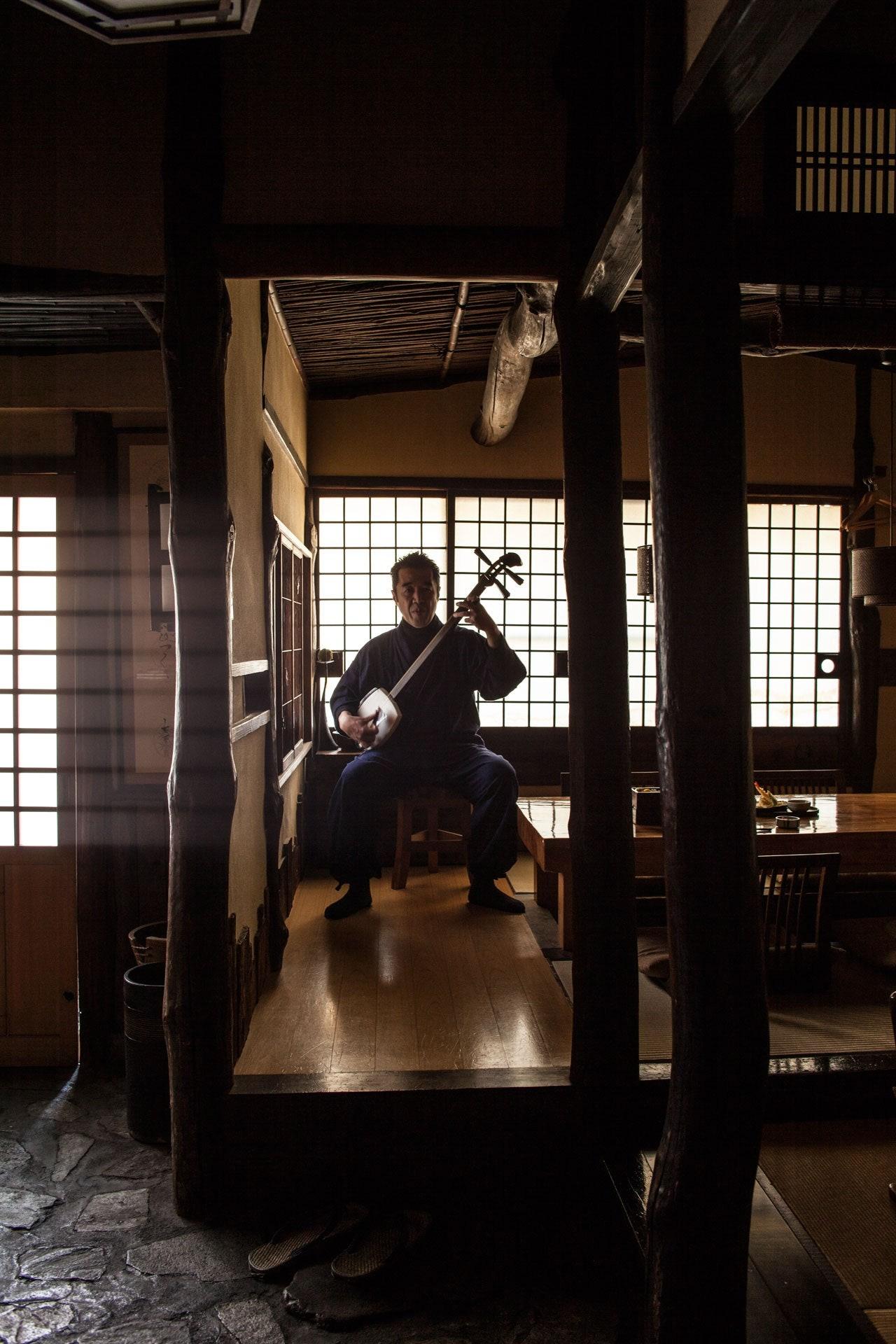
Kodai Fukui playing the tsugaru shamisen at his restaurant, Waentei KikkoBill Phelps
'When I found this old teahouse, I had a strong feeling I couldn't let it disappear and just be replaced with another concrete tower,' says Fukui, who has performed on television and abroad, and whose father was also a famous musician. 'We cannot just let all our traditions go.'
Every neighbourhood has its secrets - even Ginza, with its grand boulevards and promenades. Duck down an opening beside some vending machines to find a large white-and-blue curtain covering a locked door with a buzzer. Inside and upstairs is Sushi Ichi, where Masakazu Ishibashi serves daringly innovative dishes in a district where most chefs steadfastly stick to tradition.
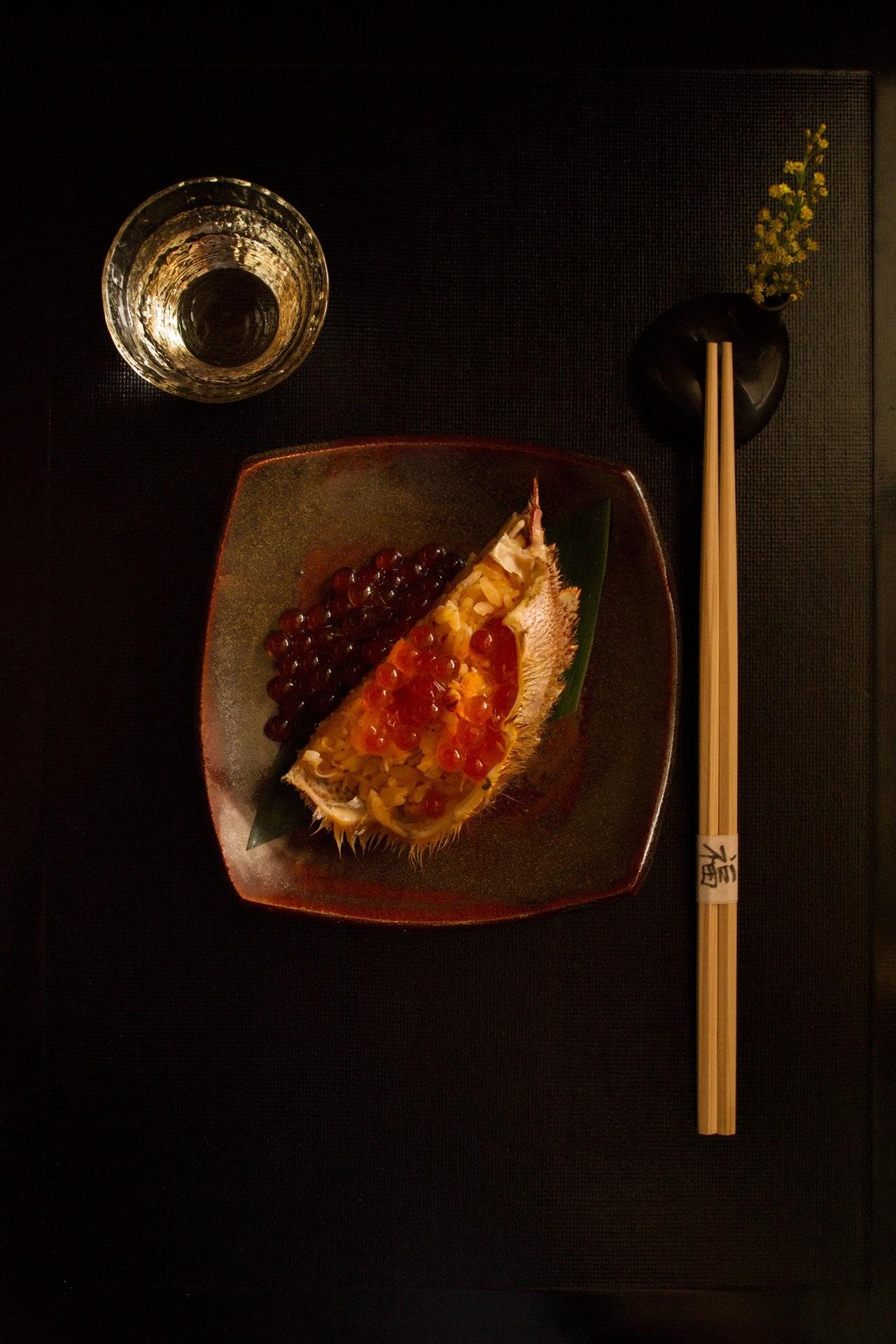
'Being in Ginza means I can keep one eye on the past and the other on the future,' says Ishibashi, who comes from a family of sushi chefs and spent several years in California. 'I don't think I break traditions. All I do is try to express myself.' Dishes such as hairy-crab risotto steamed inside the crab shell with sea urchin and sushi rice, served with a topping of salmon roe, is emblematic of his creativity. But it's the simple nigiri sushi of which he is most proud, and rightly so.
New order
One of the fascinating layers in contemporary Tokyo culture is a generational one. The young people making their mark today are free-spirited and open to questioning established ways. They are talented individuals, no doubt about that. They also reflect how much Japanese society has changed.
The 20 years of economic stagnation that Japan slogged through starting in the early 1990s are commonly called its 'lost decades'. From a cultural perspective, much was actually gained. People who once would have joined Japan Inc's punishing rat race, submitting themselves to corporate servitude as a matter of course rather than choice, were forced to think about what they really wanted to do with their lives. For many, the answer was to break out on their own.
Zaiyu Hasegawa is the freshest face among a generation of exciting young chefs transforming Tokyo's dining scene. His restaurant, Jimbocho Den, is extraordinary. Hasegawa's mother was a geisha, and hospitality is in his blood. Even though he grew up surrounded by tradition, his food expresses his own irreverent character in spades: one unorthodox dessert is served in a garden trowel. Joking aside, Hasegawa is deadly serious about food. His menus showcase Japan's finest seasonal ingredients: cuts of the best wagyu beef on rice in June, or tender fillets of autumnal sanma fish with gingko nuts in October. Each dish is presented on a stunning piece of pottery, chosen by Hasegawa's friend Kenshin Sato, whose tiny store, Utsuwa Kenshin - a Tardis-sized trove of ceramics by up-and-coming Japanese artisans - is also worth hunting down.
Hasegawa is an Instagram addict. He uploads selfies with his customers - Noma's René Redzepi has been more than once - portraits of his pet Chihuahua called Pucci, and photos of Sunday jaunts to his favourite coffee shop.
With a following of almost cult-like intensity, Omotesando Koffee is the brainchild of Eiichi Kunitomo, Japan's most successful barista-entrepreneur. Located inside an old house with a bonsai tree in one corner, it was only supposed to exist in its present form for a year or two - the property was slated for demolition.
'The owners really liked what we've done with the space, so they let us stay a bit longer,' says Kunitomo as he makes one of his famously silky iced cappuccinos. He isn't shy about sharing his secrets, such as why he refuses to compress his grinds like most other baristas. 'The taste retains a softer shape if the granules have room to breathe,' he explains.
Despite the generosity of the landlord, the existential threat to Omotesando Koffee is typical of the pressures faced by many independent businesses. Property prices are rising again, and developers have an insatiable hunger for low-yielding land ripe for conversion. Entire neighbourhoods are being refashioned, organic communities replaced with towers and piazzas. Powerful people call this progress: spatially more efficient, say the developers; safer in an earthquake, say their political friends. Others worry that the very fabric of the city is being ripped to shreds. Bohemian Shimokitazawa, for example, once the Williamsburg of Tokyo, has been dismembered by a massive infrastructure project that's seen its ramshackle railway station ripped out, soon to be replaced by an unimaginative glass-and-steel box evocative of nowhere. A grassroots organisation called Save the Shimokitazawa has been powerless to stop it.
'Worrying about change in Tokyo is a fool's errand,' the late Donald Richie, the famous author and observer of the city's society, once said. 'You might as well complain about the weather.'
Setting the Pace
Since Tokyo secured the bid to host the 2020 Summer Olympic Games for the second time, the city's construction industry has gone into overdrive. The transformative power of the first Tokyo Olympiad in 1964, which symbolized Japan's revival after World War II, still reverberates today. Tokyo's intricate web of expressways, weaving between skyscrapers and spanning rivers, along with the famed Bullet Train, known as the shinkansen, that seamlessly shuttles people to and from the capital, form the lifelines that keep this bustling metropolis in motion.
With the upcoming games, the government aims to present a strong and confident image of Japan to the world. This resolve manifests in the form of new high-rise buildings, train stations, and, of course, roadways. Notably, the in-progress Loop Road No. 2 is reportedly slated for a rebranding as Olympic Road, aptly connecting the Olympic Stadium to the athletes' village.
In addition, the Tokyo Olympics provide an opportunity for Japan to showcase its expertise in advanced infrastructure. The already impressive transportation network is set to receive further enhancements, ensuring that athletes, spectators, and locals alike can navigate the city efficiently and effortlessly.
As Tokyo continues to evolve, it is poised to leave an indelible mark, both as a host city for the Olympics and as a testament to Japan's unwavering commitment to progress.
For a glimpse of what Tokyo 2020 might look like, one need only travel a short distance along Olympic Road to Toranomon, a long-overlooked district of tired shops and faceless office blocks. They now exist in the shadow of the second tallest building in the capital, the pinnacle of a mixed-use development called Toranomon Hills (branding tagline: 'The Future of Tokyo Begins Here'), the newest development from the city's most ambitious property company, Mori Building.
Previous Mori projects were criticised for being too focused on luxury - pricey shops, unaffordable apartments, elitist art exhibitions - at a time when conspicuous consumption was going out of fashion. This one, however, strikes a note that is more in tune with the times, with morning yoga sessions, evening music concerts in the park and quality food. The seven highest floors of the main tower are occupied by the Andaz Tokyo hotel, which brings smart-casual service to a five-star property in Tokyo for the first time.
'People are getting used to it. We need to educate them,' says general manager Arnaud de Saint-Exupéry, who opened the very first Andaz in London before relocating to Tokyo. The other new entrant is the Aman Tokyo, which opened last December, bringing intimate luxury to a city starved of world-class boutique hotels. Established brands have to step up their game. The Okura Hotel, whose retro lobby was used in the James Bond film You Only Live Twice, will close its historic main building later this year and construct a newer, bigger one by 2019. Even the Mandarin Oriental Tokyo, which is barely 10 years old, is having a revamp and opening The Pizza Bar on 38th to build on the success of Sora, the cosy sushi restaurant across the lobby.
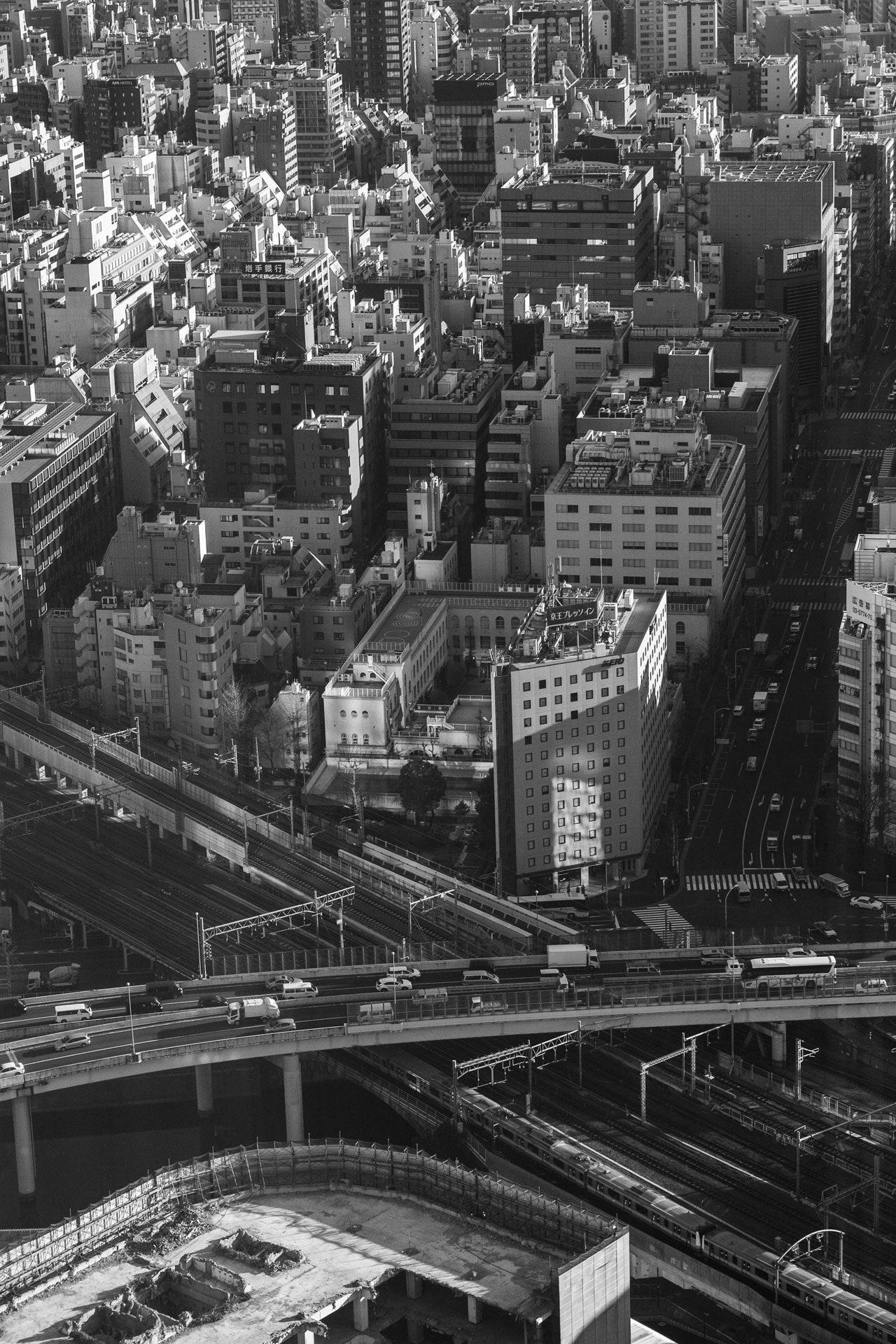
The sight from Aman Tokyo hotel is breathtakingly remarkable, as captured by Bill Phelps.
With the recent transformations, Tokyo is teeming with a renewed vibrancy and hope. This pivotal evolution is deeply appreciated especially after a number of strenuous years. The key challenge lies in accomplishing a delicate balance - one that wards off the turmoil of drastic evolution while preserving and promoting the need for safeguarding historical and cultural essence. This balance will inevitably shape Tokyo's urban landscape for generations to come.
One could not forget the visions of the prominent property magnate, Minoru Mori, embedded in the heart of the Mori Building. His demise in 2012 left an indelible impact on the real estate industry. In a conversation, he had once mentioned a peculiar ambition - practically no corner of Tokyo should be exempted, barring parks and temples, from aligning with his perception of what the city ought to look like. This encompassed his desire to create additional greenery and sustainable living areas, decreasing the need for lengthy daily commutes by enabling residents to live near their workplaces. His ideals were commendable indeed. Tokyo's admirers hope that his goals be fulfilled, in a manner that successfully retains the city's prized yet elusive characteristic of closeness and community connection.
Flash forward
The day after I discovered where the Button Bar was I went for a drink. It didn't take long - about 10 paces across the street and six floors up in a lift. I liked it, although I have no idea why it was called Button - probably because of the speed at which it closed about two months later.
But I have a new recommendation: Gen Yamamoto, a bar owned and operated by a mixologist of the same name. Watching Yamamoto work, patiently crafting his original cocktails and serving them with the elegance of a tea ceremony, is an amazing experience. So unique. So Tokyo.